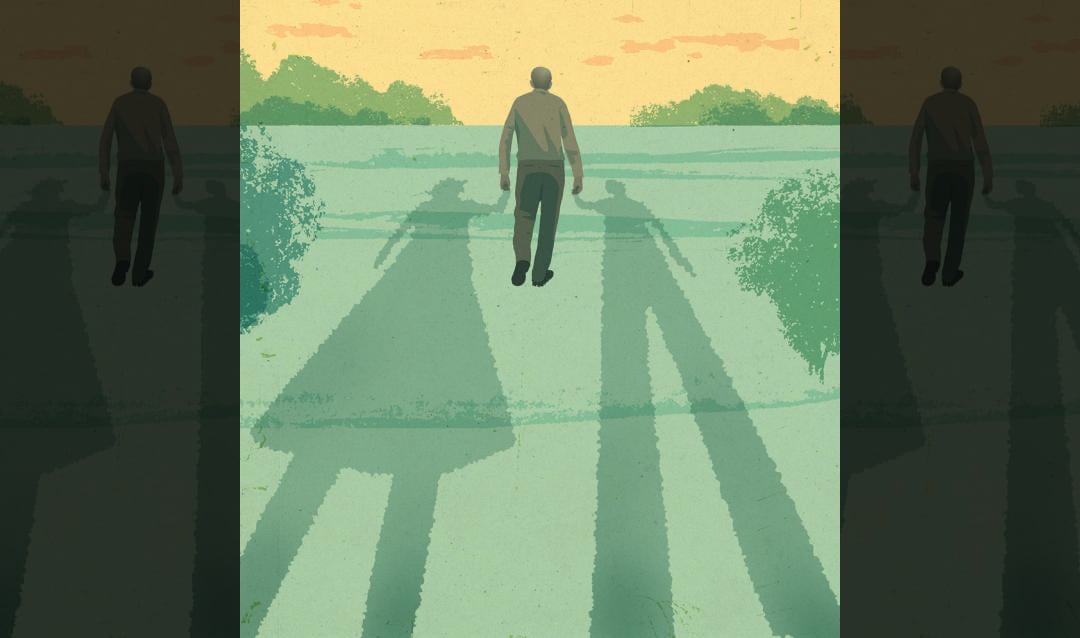
What to expect when the parent becomes the parented
By Paul Engleman
Twenty or so years ago, I wrote a short-lived weekly column in the Chicago Sun-Times called Diary of a Dad Housewife. At the time, we had a four-year-old and a two-year-old, and although the topic, parenting, was ripe for dispensing advice, I did little of that, knowing that I didn’t yet have much wisdom to share. Instead, I focused on relating the circumstances that pave the path to wisdom — emergency diaper changing in sketchy gas station bathrooms, avoiding injury to your hands or ego during car seat installation, making sure you dress yourself at least half as neatly as your kids, lest someone suspect you’re a kidnapper.
In 27 years of being a parent, I’ve found only one universal truth about raising kids: All parents have the same goal — that their children grow up to be independent human beings. We may wish for them to be happy, healthy, and successful, but the only thing we are fundamentally responsible for is guiding a fragile, totally dependent newborn to the land of adulthood. Assuming that the journey has not been detoured by health problems, at some point they are on their own. Although you’ll always be the parent, the need to act like one will eventually diminish, and at some point, you might be the one who needs parenting yourself.
Waist-deep in our 60s, my wife, Barb, and I now find ourselves in that tricky transition phase between being a parent and being parented. It’s a phase that’s already underway by the time you notice. It begins situationally, in subtle ways. Take driving, for example. After our kids got their licenses, they volunteered to drive anytime we were going anywhere. Now they are still likely to insist on driving — no longer because they are eager to do it, but because they believe they are better drivers than we are. And they’re probably right.
For several years now, when we’ve gone to a restaurant, one of the kids has been likely to reach for the check. This started as a tentative, symbolic gesture, but now sometimes they actually mean it. The day is approaching when they’ll be better able to afford it than my wife and I — which I hope will be a reflection of how well they’re doing and not how poorly we are.