

The Rotary Redbuds - Spring 2014
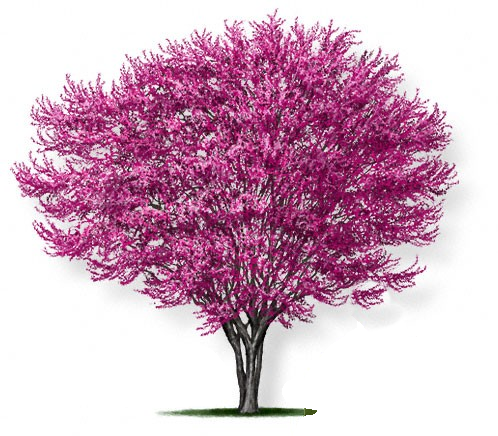 Our Redbud trees are unique and special plants and are somewhat the “ugly duckling” in terms of getting out of the gate. They take a while to get established and develop. Add a record-breaking, brutal winter where even the notorious tough guys took a hit, and it means they will take a little longer to become the stunning beauties they will turn into.
If you have inspected our Redbuds this spring, you may have noticed very significant twig die back and branches that are probably dead. They have also been very slow to leaf out. On the other hand, you may have noticed old and well established Redbuds that are putting on a glorious flower display.
So what’s going on? A number of factors, but two principle ones to understand regarding our Redbuds are establishment and age of the plant. The first point is establishment. When a plant moves from the nursery, it leaves the nurturing environment it was growing in and moves out into the cruel, harsh world. Also, they have just had the equivalent of a kidney transplant, losing half the roots they had previously relied on. So now they are in convalescence plus they no longer receive the same love and attention in terms of water, fertilization, cultivation, pruning, protection, etc. In short, they need time to adjust to their new environment and send out and develop the new roots they need to become a happy plant. Energy for new root growth gets first dibs for food resources at the expense of the top, but a healthy and vigorous root system ultimately means a healthy and vigorous top. And of course the top is what we want to see.
The second point is age of the plant. So we know an older plant is well established, but why no twig and branch dieback? In the case of Redbud trees, juvenile, new growth that has continued late into the season can be subject to winter kill in severe seasons. There are a number of identifying characteristics to juvenile growth, but a few factors can be; larger or smaller than normal leaves, long stem growth, or weak stem growth and leaves that may stay on late into the fall or not drop until the following spring. All of these characteristics apply to our newly planted Redbuds. By comparison, older mature plants no longer exhibit rapid juvenile growth or other juvenile characteristics. Consequently, they no longer have extensive stem elongation and tend to have thicker, stockier and shorter twigs and new branches. They also stop growing as late into the season and start their winter hardening off process in early September instead of into October. They are preparing themselves for winter earlier and are thus better prepared for Wisconsin’s cruel dark, frigid winters.
So our Redbuds will come around and ultimately be the very special trees and unique gems we want in the landscape. Remember, if these were no brainers and grew like weeks, they would lose their special appeal.
Bill Wandsnider