

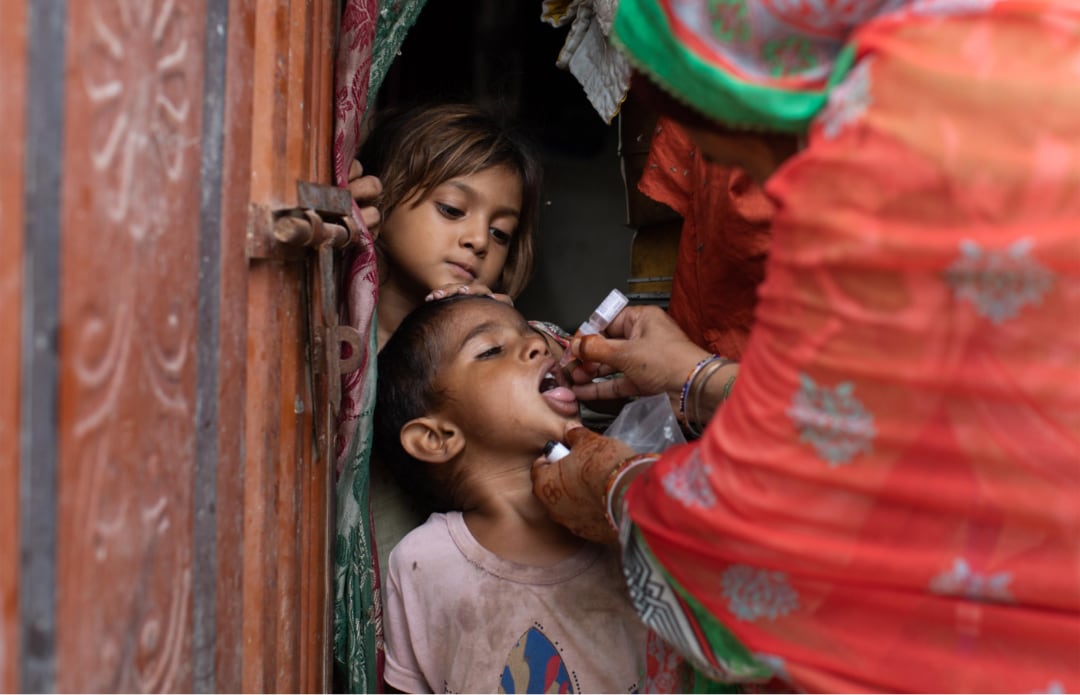
A modified vaccine offers hope that eradication is closer than ever
By Jason Keyser
In mid-2017, two groups of 15 strangers lived together for 28 days each in a ring of shipping containers assembled in the parking lot of Antwerp University Hospital in Belgium. They had access to books and movies, a small courtyard for barbecues, a common kitchen and dining room, and a fitness room — all of it behind secure interlocking doors and under the watch of personnel in protective gowns.
What sounds like a reality TV or sci-fi scenario was, in fact, a remarkable clinical trial of the latest weapon in the battle to eradicate polio — a reengineered vaccine called the novel oral polio vaccine type 2, or nOPV2. The study aimed to evaluate whether the altered formula, the first major update to polio vaccines in about six decades, could help end outbreaks of circulating vaccine-derived poliovirus, also known as variant poliovirus. Such cases arise in rare instances when the live but weakened virus contained in oral polio vaccines circulates in areas of low vaccine coverage and mutates back into a dangerous form that can infect people who have not been fully vaccinated.
These variant poliovirus outbreaks have emerged over the past two decades as a significant stumbling block in the effort by Rotary and its partners in the Global Polio Eradication Initiative (GPEI) to wipe out the disease. The outbreaks are different from those driven by wild poliovirus, which circulated naturally in the environment for millennia and remains endemic in just two countries, Afghanistan and Pakistan. But the outcome is the same — the virus in either kind of outbreak can, in rare instances, cause paralysis.
